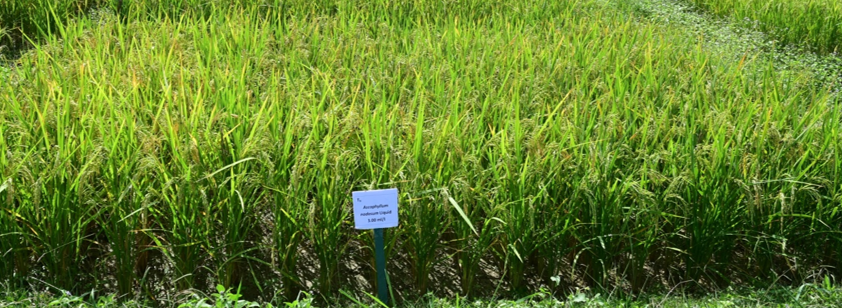

Ascophyllum nodosum Liquid was evaluated on rice across three contrasting agro-ecological zones of Himachal Pradesh, India, to determine its influence on crop growth, yield attributes, grain productivity, nutrient content and economic performance.
The university-led study covered Akrot, Palampur and Dharer, representing sub-montane low hills, mid-hill sub-humid and high-hill temperate environments.
Multi-Location Evaluation
Crop: Rice, variety PAC 807+
Locations: Akrot | Palampur | Dharer
Agro-Ecological Zones: 3
Application Rates: 1, 2 & 3 mL/L
Design: Randomized Block Design | 4 replications
Study Year: 2024
Consistent Yield Improvement Across All Three Locations
Application of Ascophyllum nodosum Liquid significantly improved rice grain yield across the evaluated environments, with 3 mL/L producing the highest grain yield at all three locations.
| Location | 3 mL/L | Control | Yield Increase |
| Akrot | 6,448 kg/ha | 5,438 kg/ha | +18.6% |
| Palampur | 5,150 kg/ha | 4,217 kg/ha | +22.1% |
| Dharer | 4,560 kg/ha | 3,707 kg/ha | +23.0% |
The study also assessed grain nitrogen, phosphorus, potassium and protein content, with treatment responses varying by location and application rate.