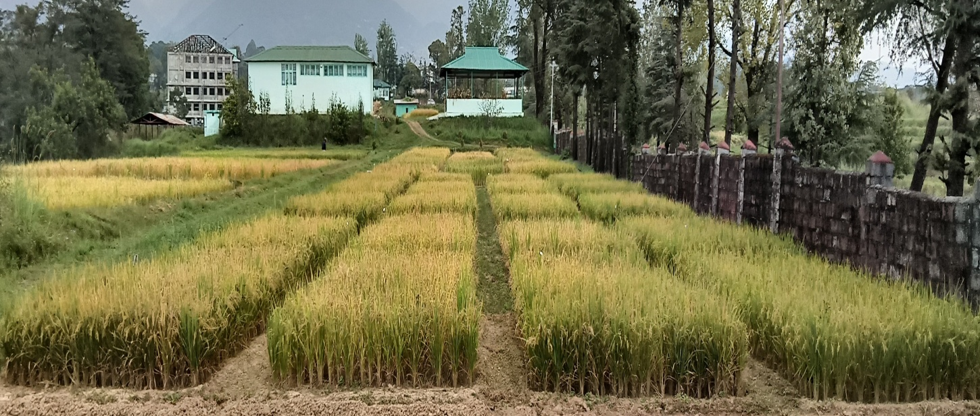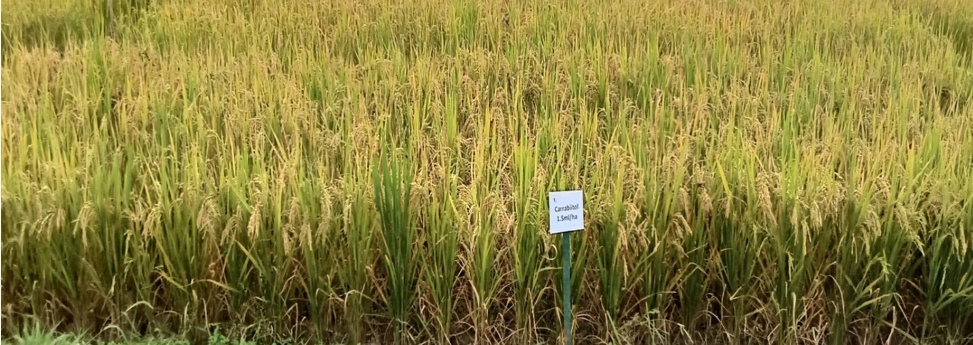

Carrabiitol® was evaluated during Kharif 2025 in two independent university-led studies across three rice-growing locations in India. Trials were conducted by Punjab Agricultural University (PAU), Punjab, and CSK Himachal Pradesh Krishi Vishvavidyalaya (CSKHPKV), Palampur, to evaluate its effect on rice growth, yield attributes, productivity and crop safety.
Validation Across Diverse Rice-Growing Environments
2 Agricultural Universities | 3 Agro-Ecological Regions | 4 Replications
Punjab: PAU Ludhiana (AER 9) and PAU Mansa (AER 2)
Himachal Pradesh: Palampur, Western Himalayas (AER 14)
Both studies used randomized block designs and evaluated Carrabiitol® at 1.5, 3.0, 4.5 and 6.0 mL/L against a water-sprayed control.
Observations :
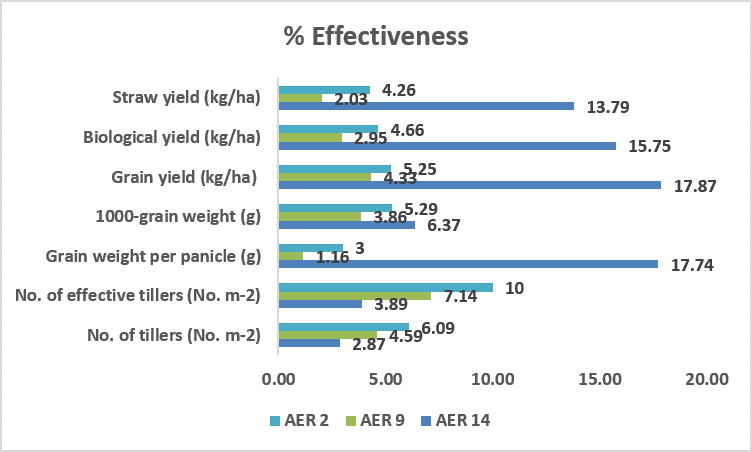
+17.87 % Grain Yield | Himachal Pradesh
At Palampur, Carrabiitol® at 4.5 mL/L produced the highest grain yield of 4,670 kg/ha, compared with 3,962 kg/ha in the untreated control.
The same treatment also recorded higher grains per panicle, grain weight per panicle and 1000-grain weight, demonstrating improvement in important yield-contributing characteristics.
Consistent Positive Yield Trend Across Punjab Locations
Carrabiitol® at 4.5 mL/L also recorded the highest grain yield at both Punjab locations:
PAU Ludhiana: 5,727 kg/ha vs. 5,490 kg/ha control — +4.3%
Mansa: 6,474 kg/ha vs. 6,151 kg/ha control — +5.2%
Supporting Rice Productivity Across Environments
Across the combined evaluations, 4.5 mL/L emerged as the most consistently responsive Carrabiitol® treatment, with the strongest yield response recorded under the Western Himalayan conditions at Palampur and at both Punjab locations.