


The agricultural industry has witnessed remarkable growth in the use of mycorrhizal fungi over the past decade. Numerous products today emphasize higher spore counts, infective propagules, or microbial concentration as indicators of product quality. While these parameters are undoubtedly important, they answer only one part of a much larger biological question.
What ultimately determines field performance is not merely the presence of beneficial microorganisms, but their ability to establish a rapid and effective symbiotic relationship with the host plant under real agricultural conditions.
This distinction becomes increasingly important as agriculture moves towards more sustainable and regenerative production systems.
Looking Beyond the Microbe
For many years, research and product development in mycorrhiza have focused on improving microbial quality—better strains, higher propagule counts, enhanced viability, and improved formulation stability. These advancements have significantly strengthened the biological industry.
However, our research led us to a different question.
What if the limiting factor is not always the microorganism itself?
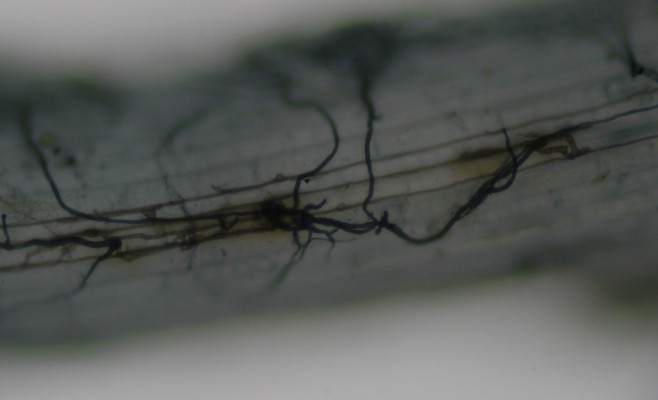
Successful mycorrhizal colonization depends equally on the biological readiness of the plant root system. Even highly viable propagules cannot establish an efficient symbiosis unless the root environment is physiologically prepared to recognize, interact with, and support fungal colonization.
This realization shifted our research from simply developing better microbial formulations to understanding the biological dialogue occurring between plant roots and beneficial fungi.
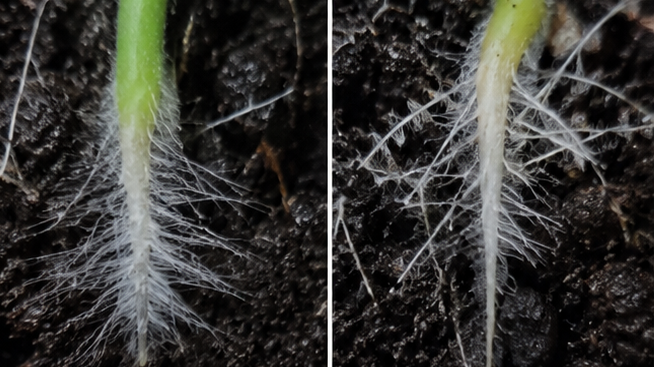
Root Hairs: The First Gateway to Symbiosis
Root hairs are among the earliest and most important interfaces through which plants interact with the surrounding soil microbiome.
A greater abundance of root hairs provides:
- Increased surface area for microbial interaction
- More attachment sites for fungal hyphae
- Enhanced chemical signalling between plant and fungus
- Improved opportunities for successful colonization
In essence, root hairs create a biologically receptive environment where beneficial fungi can establish themselves more rapidly and efficiently.
This insight became the foundation of our next-generation technology platform.
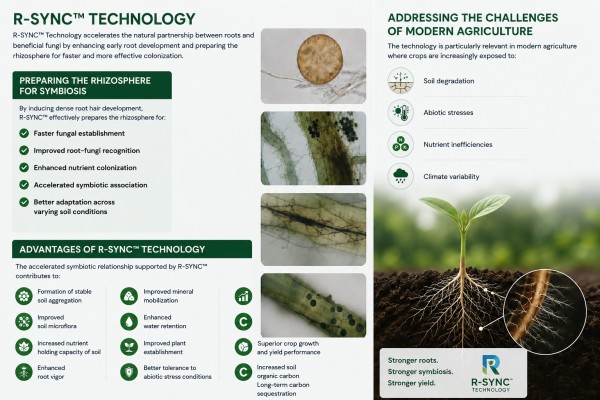
Introducing R-SYNC™
Rhizospheric Symbiosis Induction & Nutrient Colonization Complex
R-SYNC™ was developed with a simple but powerful objective:
Instead of focusing solely on delivering beneficial microorganisms, prepare the plant root system to become a better biological partner.
The technology combines carefully selected mycorrhizal cultures with biologically active metabolites—including plant growth-promoting compounds, enzymes, siderophores, organic acids, glycoproteins, and amino acids—that stimulate early root hair initiation and proliferation.
By enhancing root hair development during the critical establishment phase, R-SYNC™ helps create a rhizosphere that is more receptive to mycorrhizal colonization, leading to faster and more efficient plant–fungus interactions.
Rather than acting as a conventional inoculant alone, R-SYNC™ functions as a symbiosis initiator, improving the biological synchronization between the host plant and beneficial fungi.
Why This Matters
Earlier and more effective colonization can contribute to:
- Enhanced nutrient acquisition
- Improved water uptake
- Better establishment of beneficial microbial communities
- Increased tolerance to abiotic stresses
- Improved soil aggregation and rhizosphere health
- Enhanced crop establishment and productivity
These advantages become particularly valuable under today’s agricultural challenges, where crops increasingly face nutrient limitations, degraded soils, climate variability, and environmental stress.
The Journey Behind the Technology
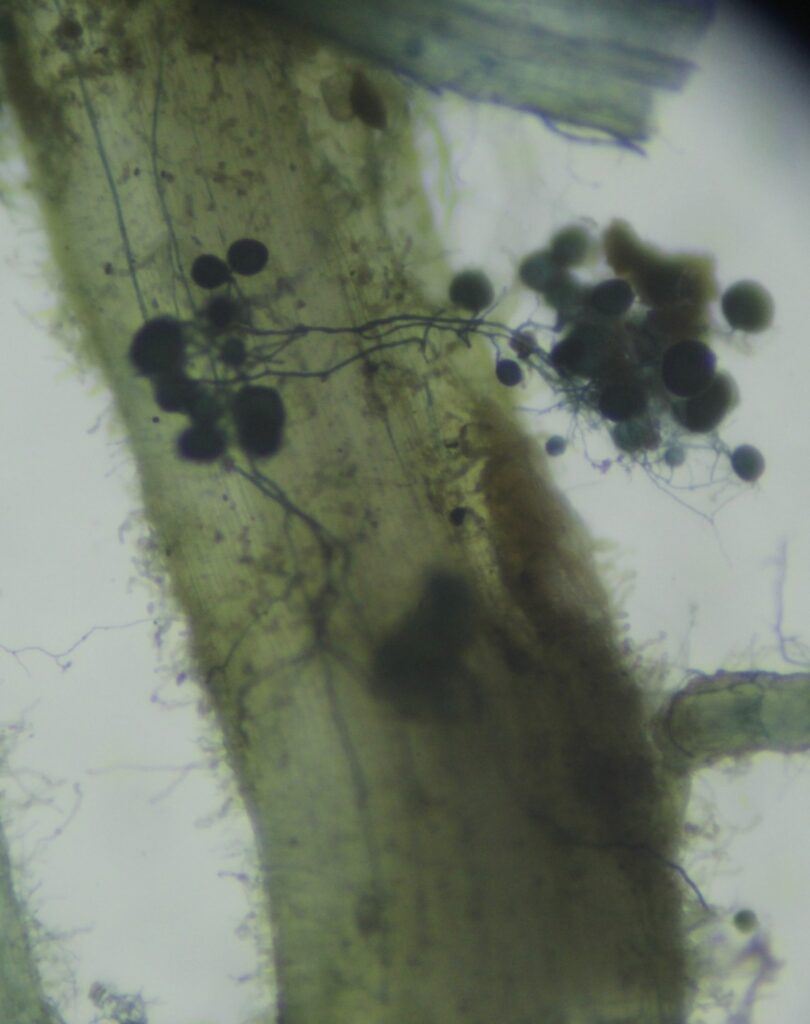
The development of R-SYNC™ did not begin with formulation chemistry—it began with a scientific question.
Over more than a decade of research, we observed that the field performance of biological products often varied considerably across crops, soils, and agro-climatic regions. This led us to investigate not only microbial selection but the broader biological interactions occurring within the rhizosphere.
Our research program involved:
- Isolation and characterization of indigenous beneficial microorganisms.
- Screening for field adaptability and compatibility.
- Development of robust microbial consortia.
- Optimization of formulation technologies to preserve microbial viability, infectivity, and functional characteristics throughout production and storage.
This work has resulted in a proprietary microbial culture bank comprising hundreds of indigenous plant-beneficial microorganisms and the development of technologies aimed at improving field performance through enhanced biological compatibility.
R-SYNC™ represents one outcome of this continuing scientific journey.
The Future of Biological Agriculture
As biological agriculture continues to evolve, the focus is likely to shift from simply increasing microbial numbers to improving the efficiency of biological interactions.
The next generation of agricultural innovations will not be defined solely by the microorganisms they contain, but by how effectively they establish functional partnerships with plants under practical farming conditions.
Understanding and enhancing these complex plant–microbe interactions will be essential for improving nutrient efficiency, crop resilience, soil regeneration, and long-term agricultural sustainability.
At Agri Biochem research lab , we remain committed to advancing science-driven biological technologies through continuous research, innovation, and collaboration with the global agricultural community.